Tide Startup Hub
One place to get a new business off the ground
A hub inside Tide's web app where founders see their company details, start the services they need, keep track of key dates and learn as they go.
- Company
- Tide
- Type
- Web app, responsive
- Year
- 2022
- Scope
- Discovery research, information architecture, MVP and shipped web screens
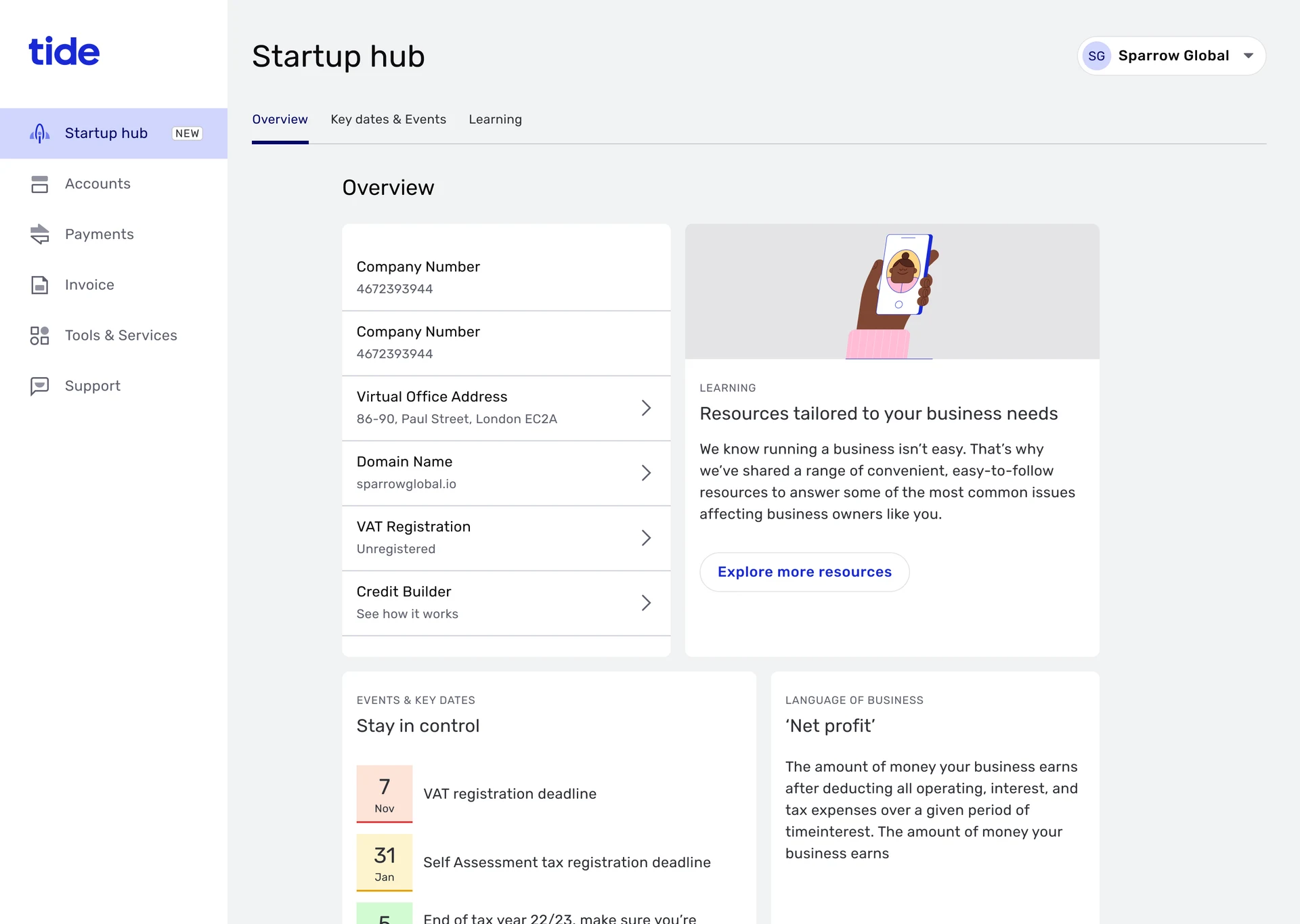
Overview: company details and services on the left, learning and key dates beside them
Overview
Tide is an online business bank and platform aimed at, and popular with, start-ups and small businesses. Its ambition is to be the single online hub for a business's financial admin, whether or not the business banks with Tide.
New businesses have to go through certain steps to start up: company formation, a virtual office, a business account and many others. Tide offered many of these as independent journeys, and founders often used several providers at different times to complete them.
Startup Hub is a central place business owners can dip into, with a suite of products relevant to where their business is in its journey.
The problem
Founders of new startups often don't know what steps to take in their startup journey. It can take a long time to decide which services are relevant for their evolving needs.
It is also inconvenient and confusing to sign up for and manage separate services across multiple platforms. This distracts founders from their critical business tasks.
User needs
Make informed decisions about which services to buy as their needs change.
Reach relevant start-up services and information in one place they can dip into when needed.
How might we
- -
Make it easier for founders to know what they need to do after company formation?
- -
Make start-up admin easy to start and quick to get done?
- -
Raise awareness of which tasks business owners need to do, and when?
- -
Get business owners to come back to the hub regularly?
Research
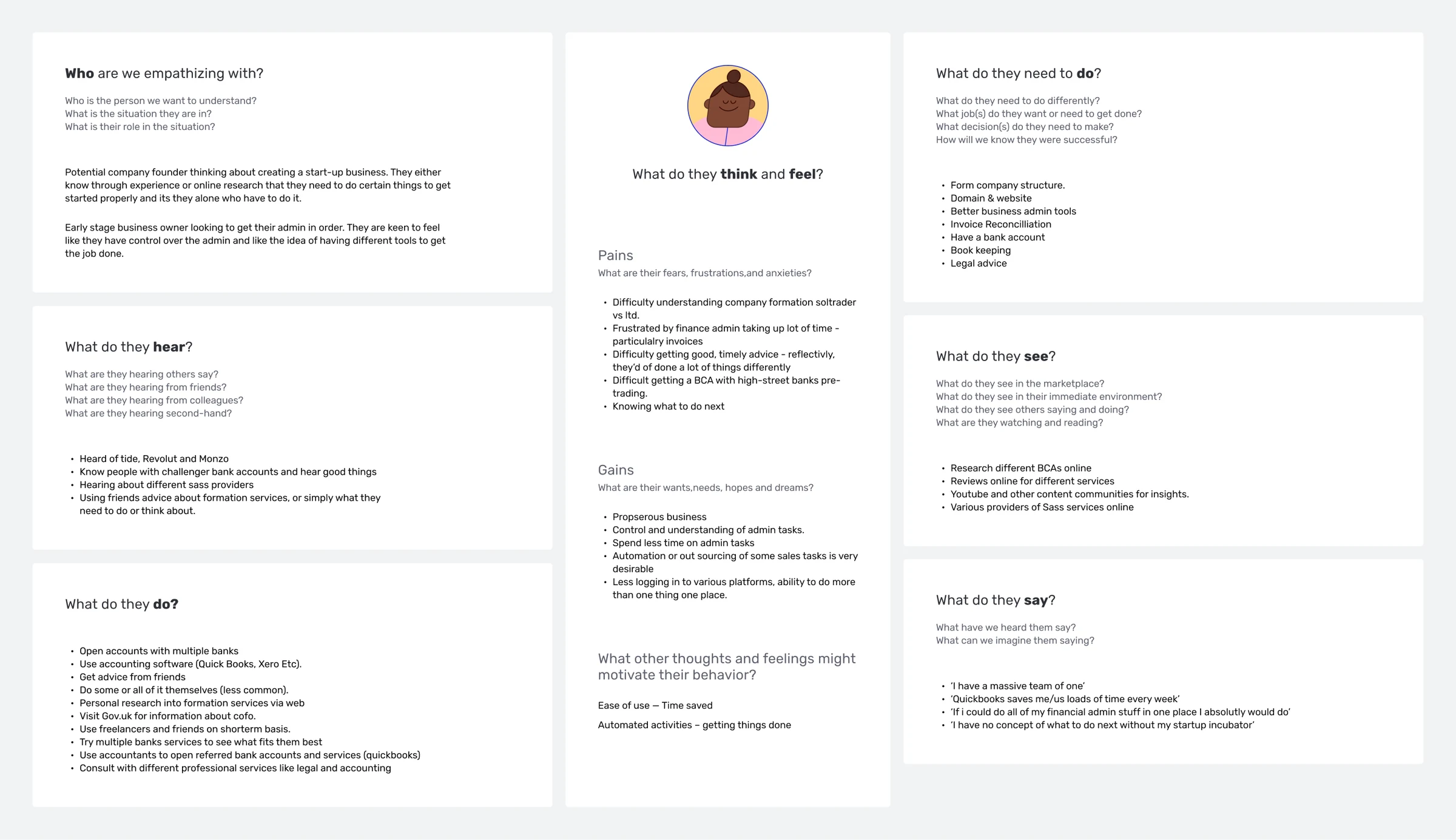
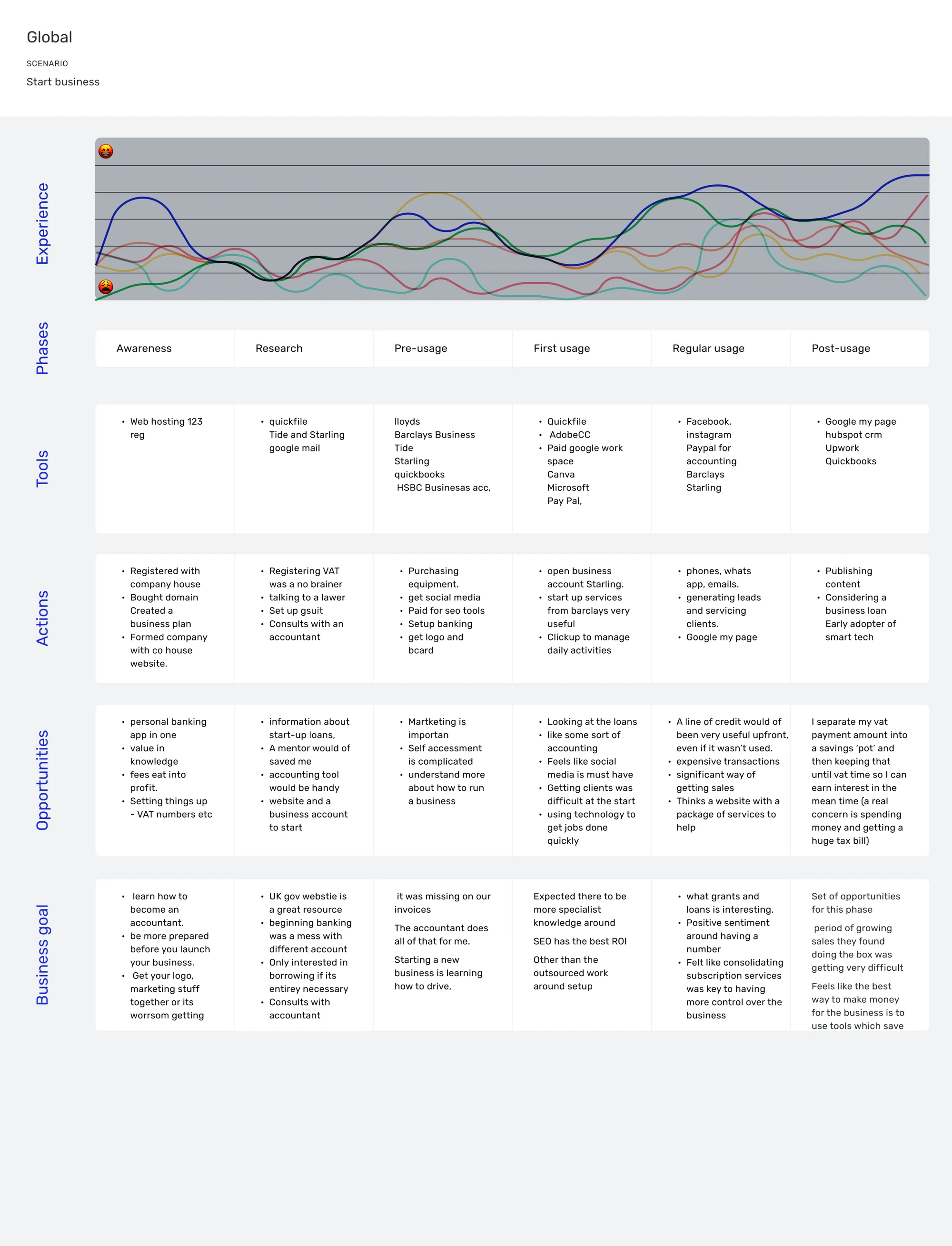
Discovery started with moderated, semi-structured interviews about how business owners got new businesses off the ground. Each conversation became an empathy map and a journey from awareness to regular use: the tools they used, what they did, and where the opportunities were.
Three themes
- 01
Forming a business structure and beyond. Once a structure was chosen, owners did not dwell on it. They moved on to the next thing: branding, a website, VAT, an accountant.
- 02
Time-saving software. If the time saved was significant and gave the owner a feeling of control, they were willing to pay for it even when funds were tight.
- 03
Many providers in different places. The idea of one platform with several services was widely wanted, though people did not agree on which services.
What it came down to
Owners went about things in many different ways. Whatever they did, the underlying theme was feeling in control. As a business grew, admin spread across more accounts, subscriptions and passwords, and research ate more time.
If Startup Hub could bring financial and admin jobs into one place, show important company information and teach the tasks alongside offering solutions, it would give that feeling of control.
70%
confirmed the need for a knowledge base
60%
found applying for a loan interesting
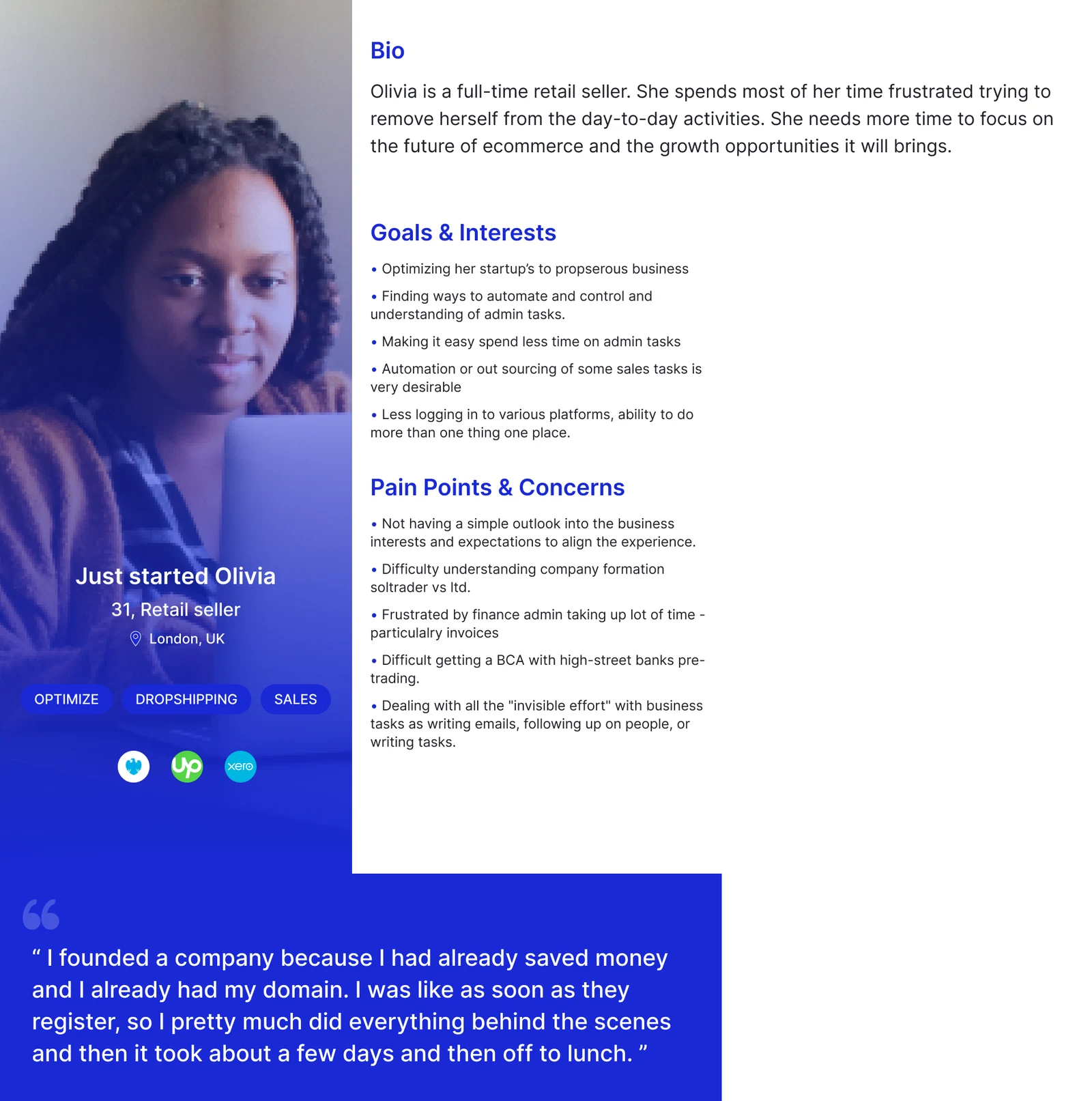
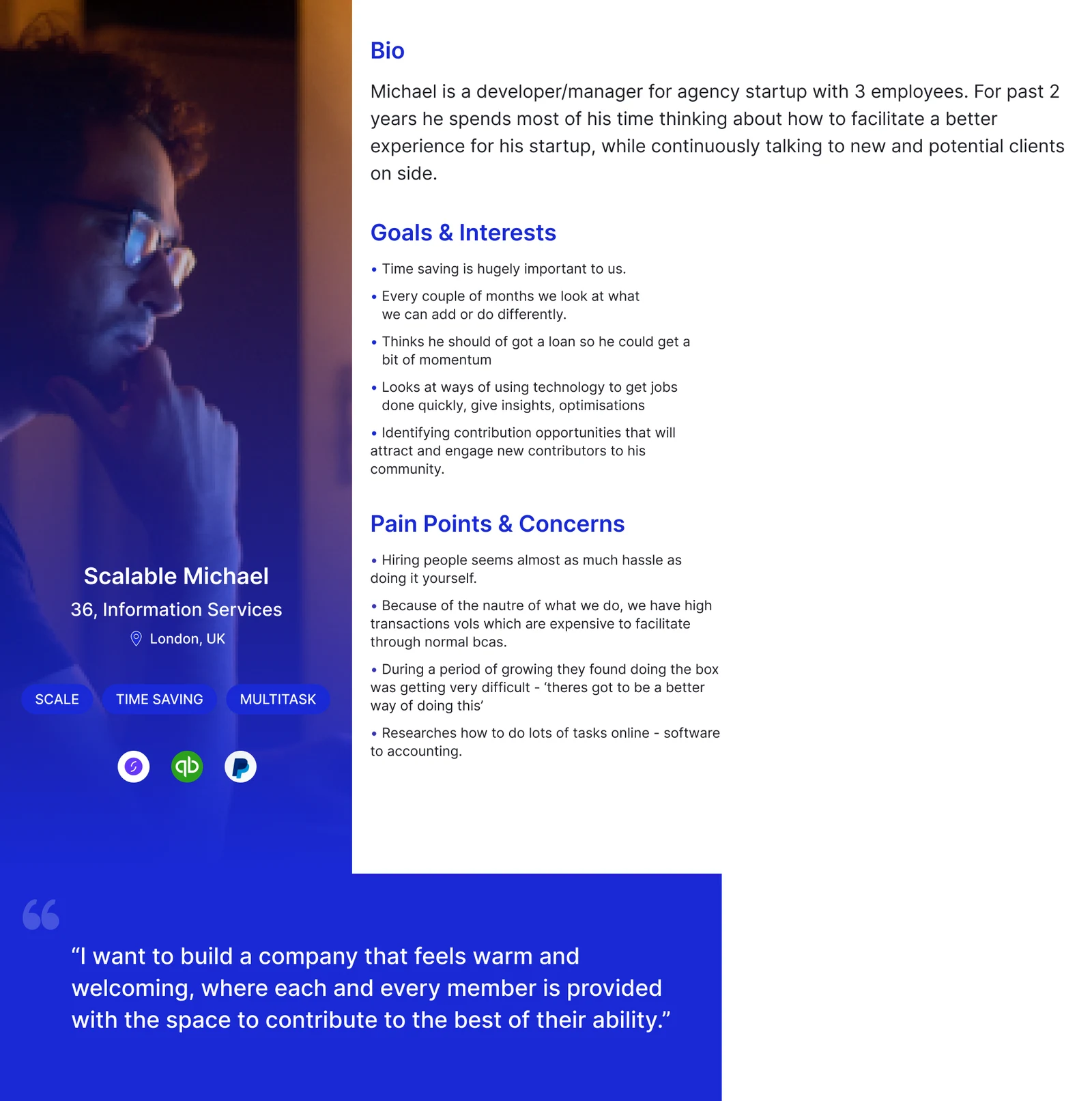
Personas
Defining the first version
Decisions
- -
Users enter the hub when they finish company formation with Tide.
- -
The first version lets users discover and start new products, but not manage them fully.
- -
Later versions add more self-management.
- -
The hub itself is free. It showcases Tide's products, which carry their own fees.
From user stories to features
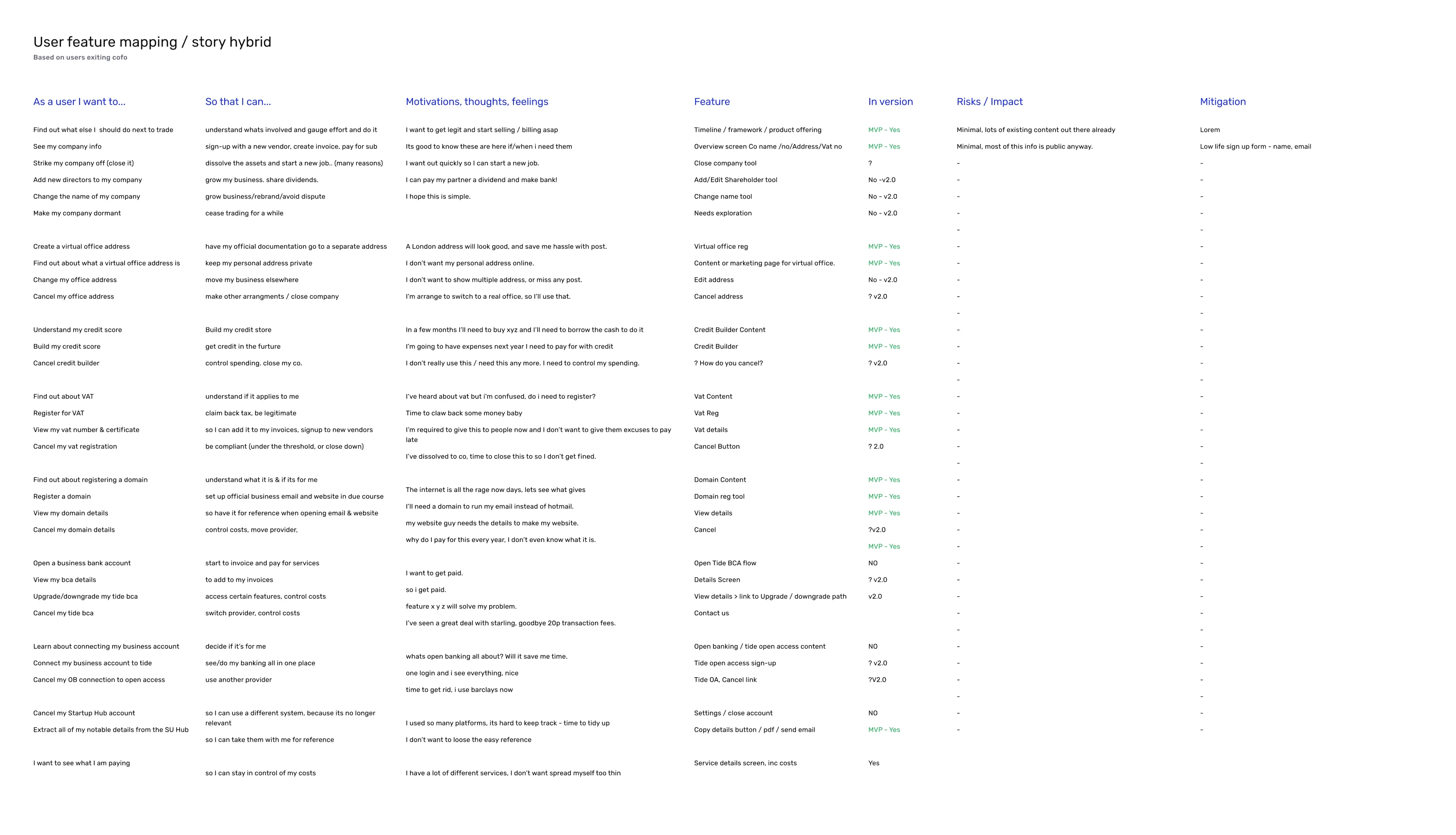
Each job a founder might bring to the hub was written as a story, then mapped to a feature and to the version it belongs in.
Structure
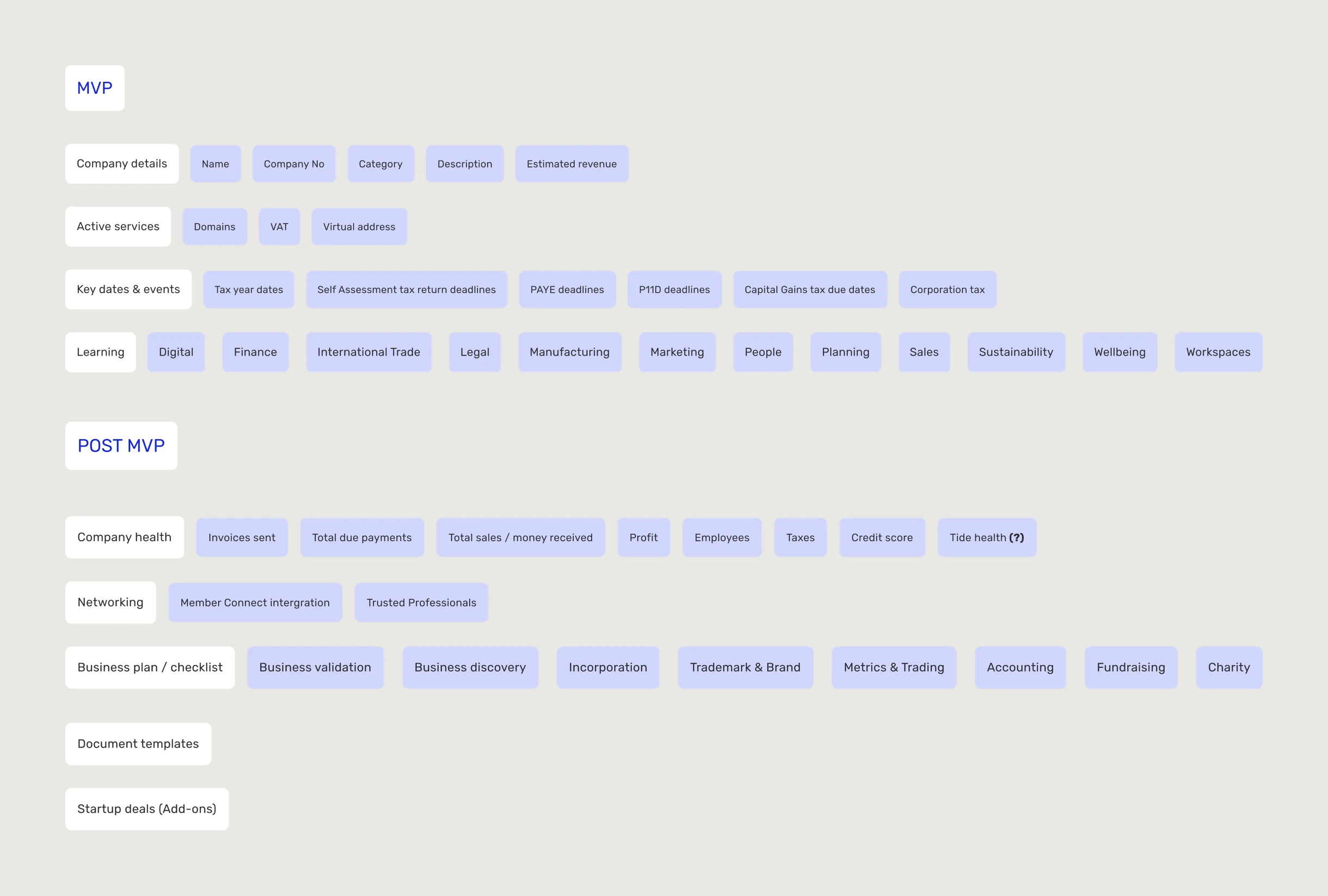
The MVP has four parts: company details, active services, key dates and events, and learning. Company health, networking and a business checklist were set aside for later.
The solution
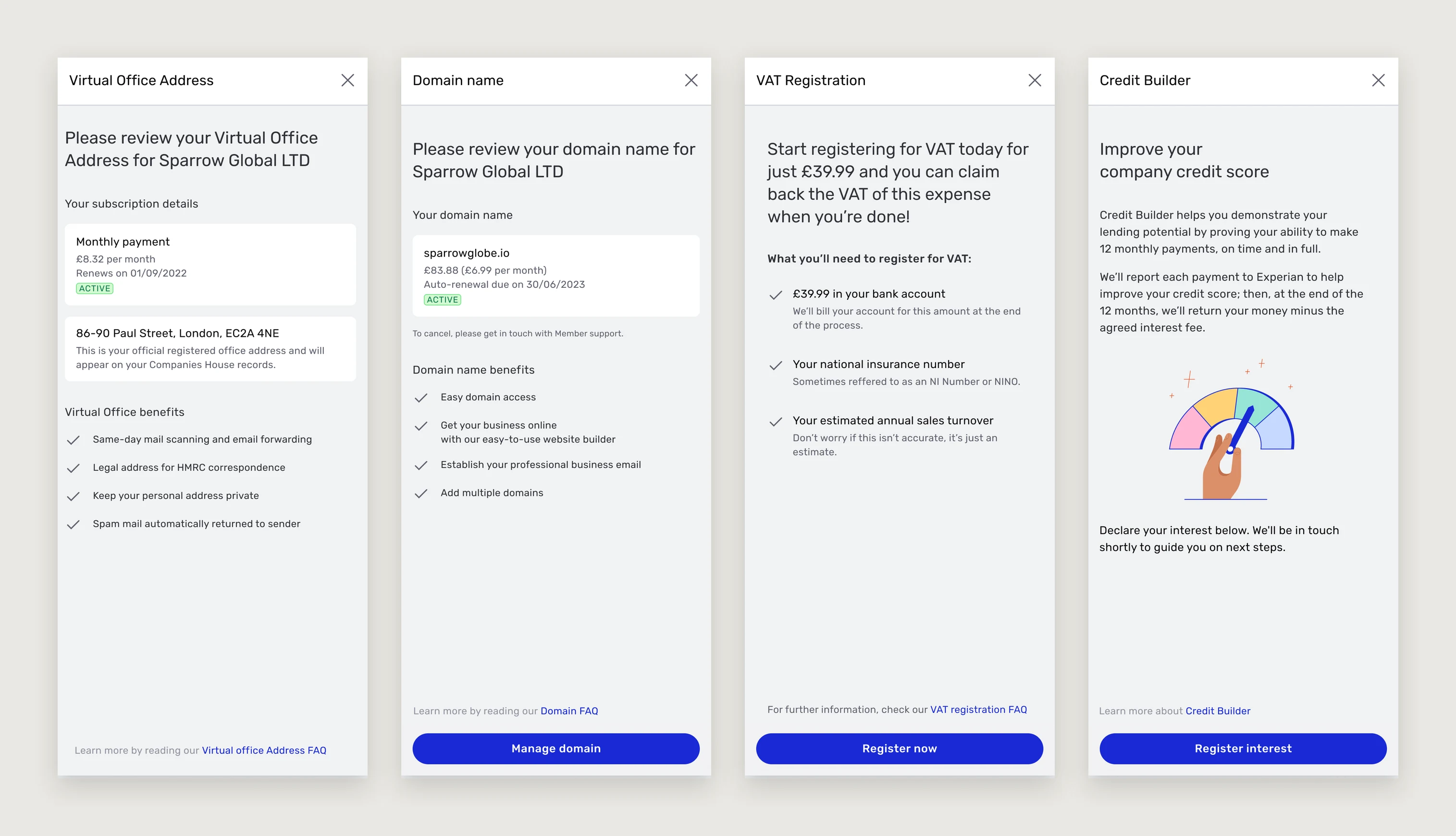
01Services open beside the overview
Each service in the overview opens in a side sheet, so the founder keeps their place. Virtual office and domain show what is active and what it costs. VAT and Credit Builder explain what is needed before anything starts.
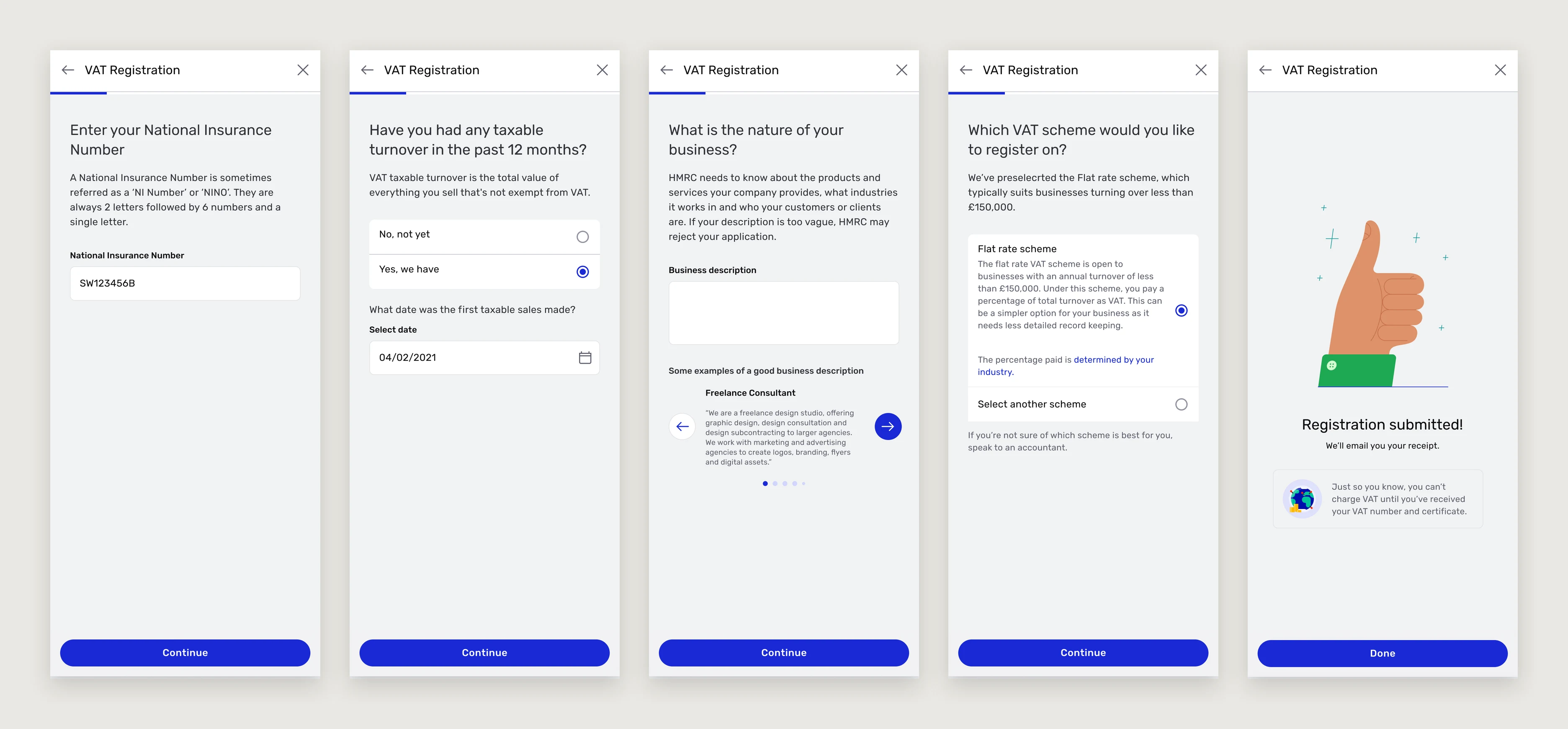
02VAT registration, one question at a time
VAT registration asks one question per step, in plain language, with examples where HMRC is strict, such as the business description. The flat rate scheme is preselected with an explanation of who it suits.
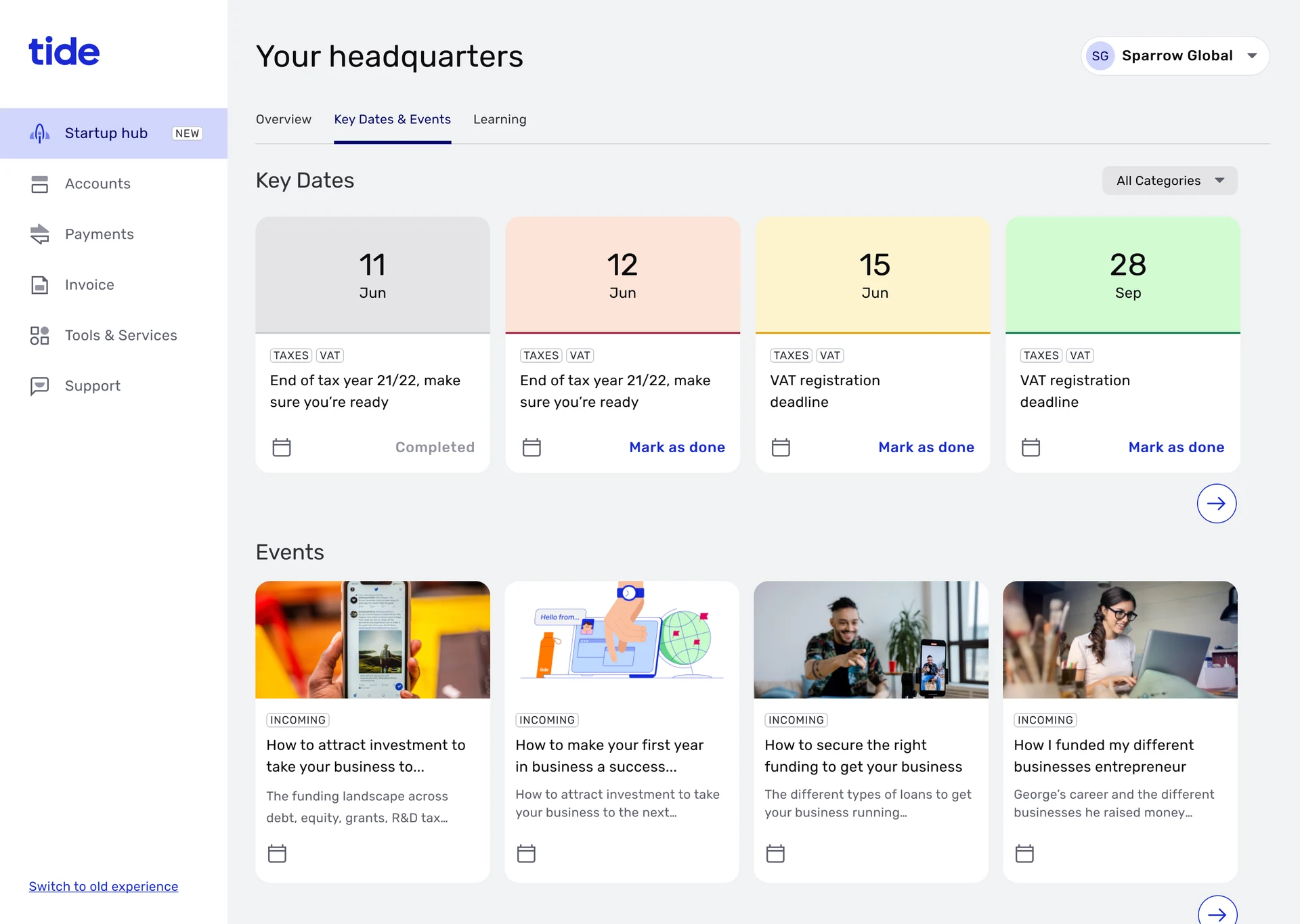
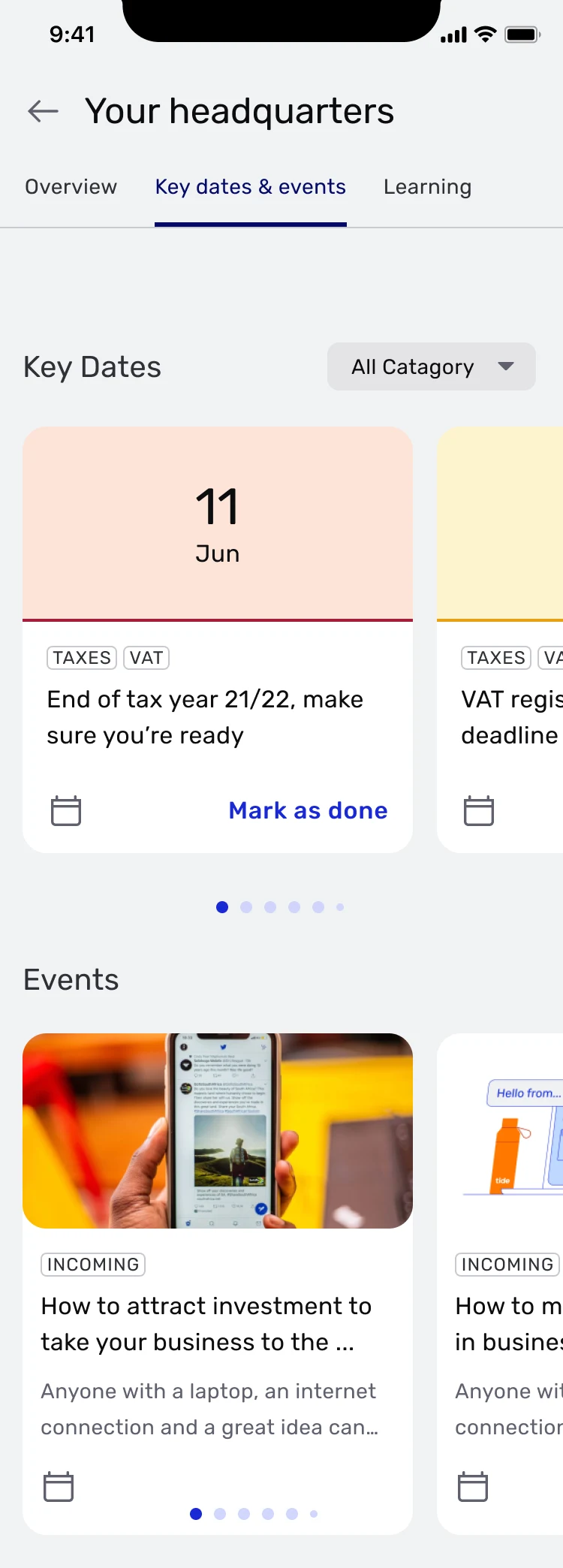
03Key dates and events
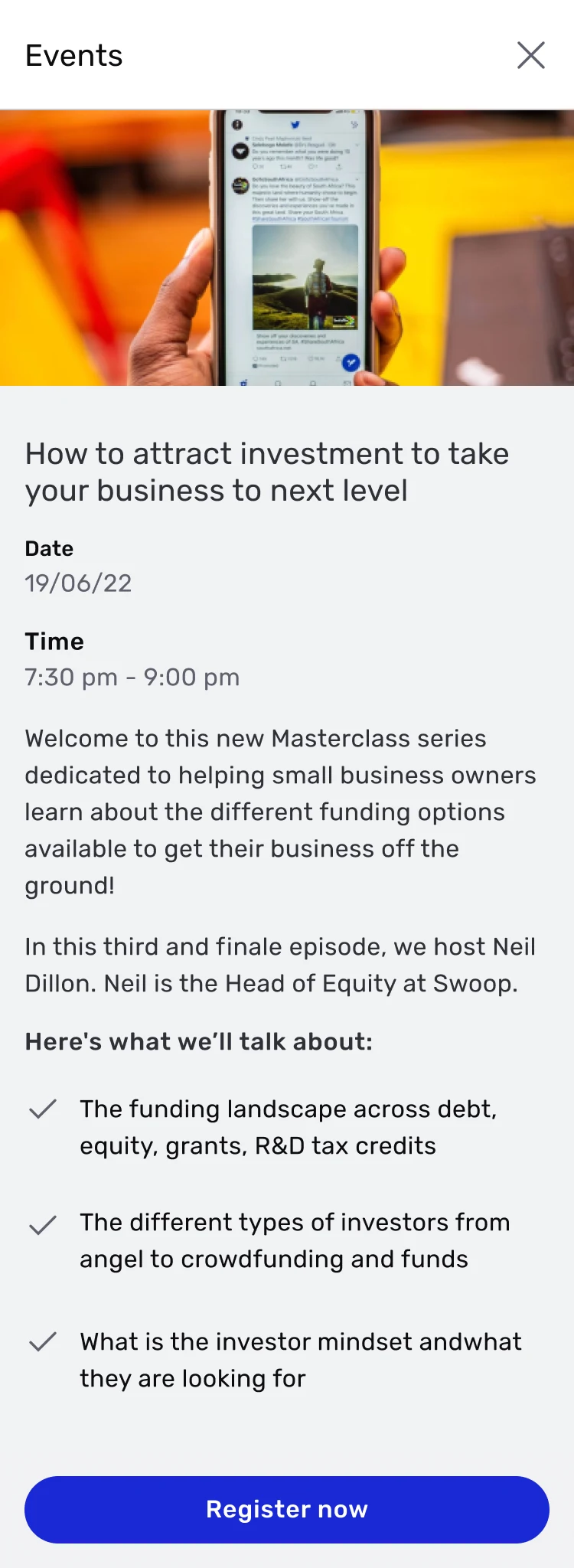
Tax deadlines sit in one calendar with colour for urgency and a way to mark each one done. Events from Tide sit below them. Opening a date explains what it means for the business.
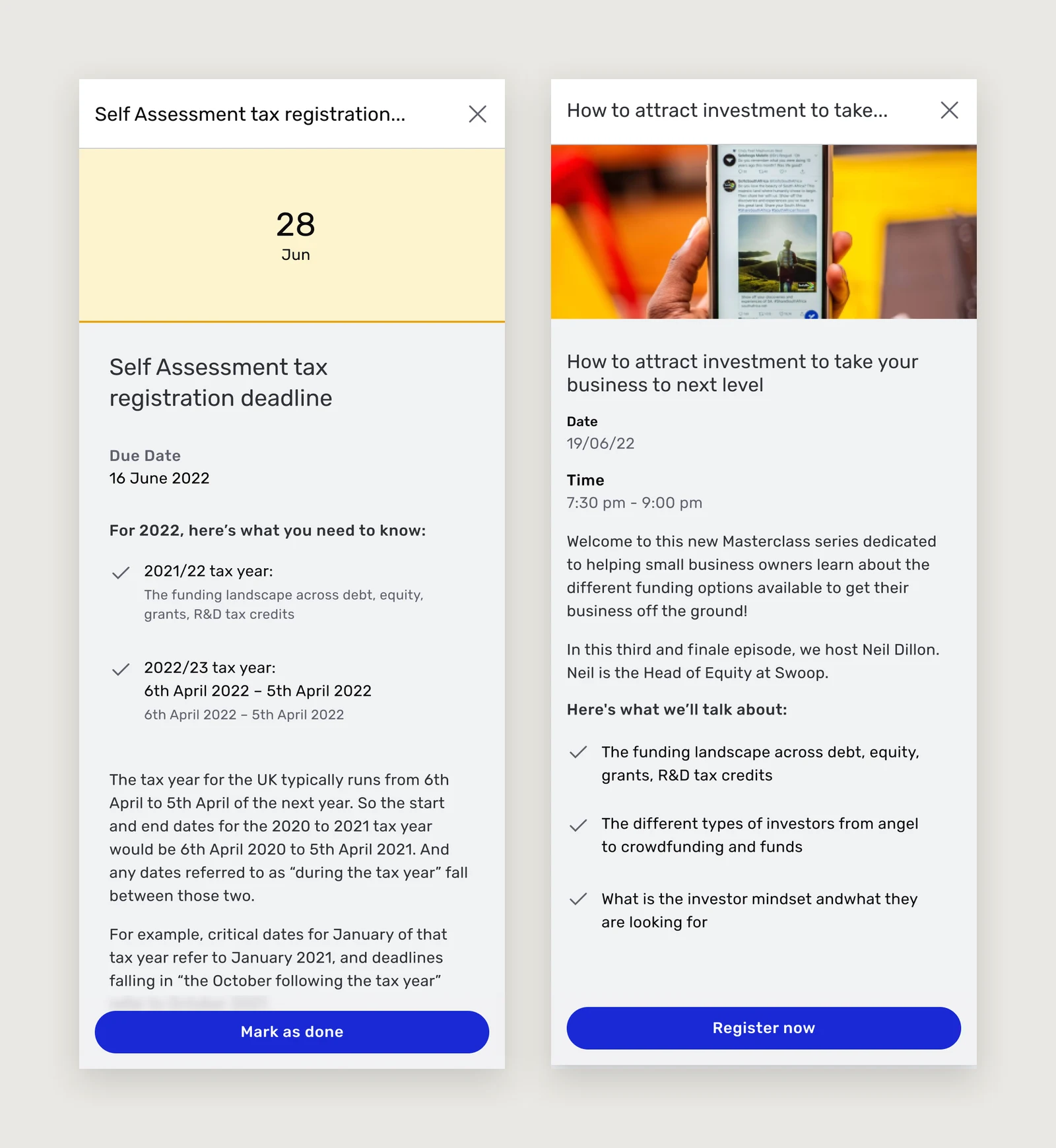
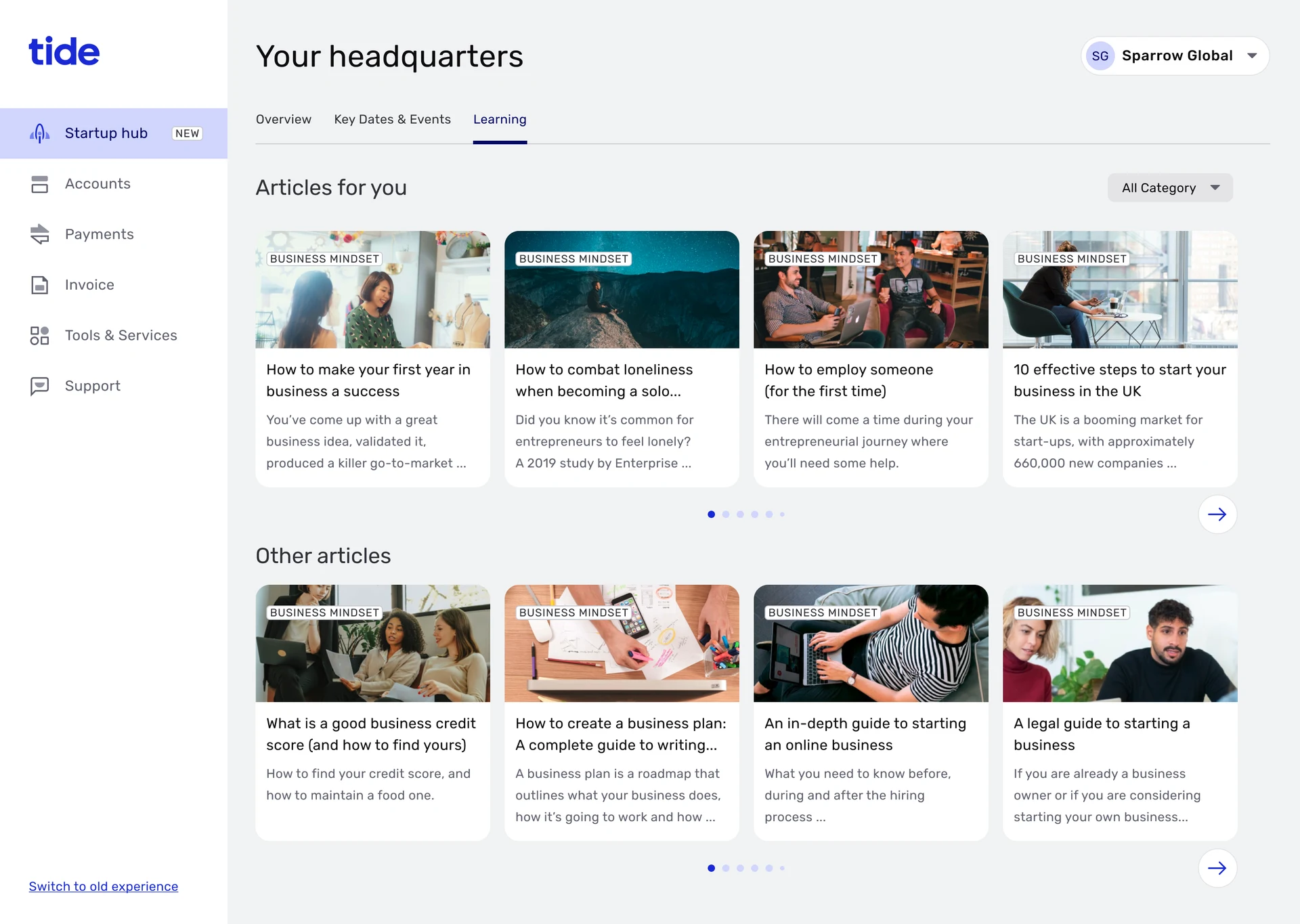
04Learning that fits the business
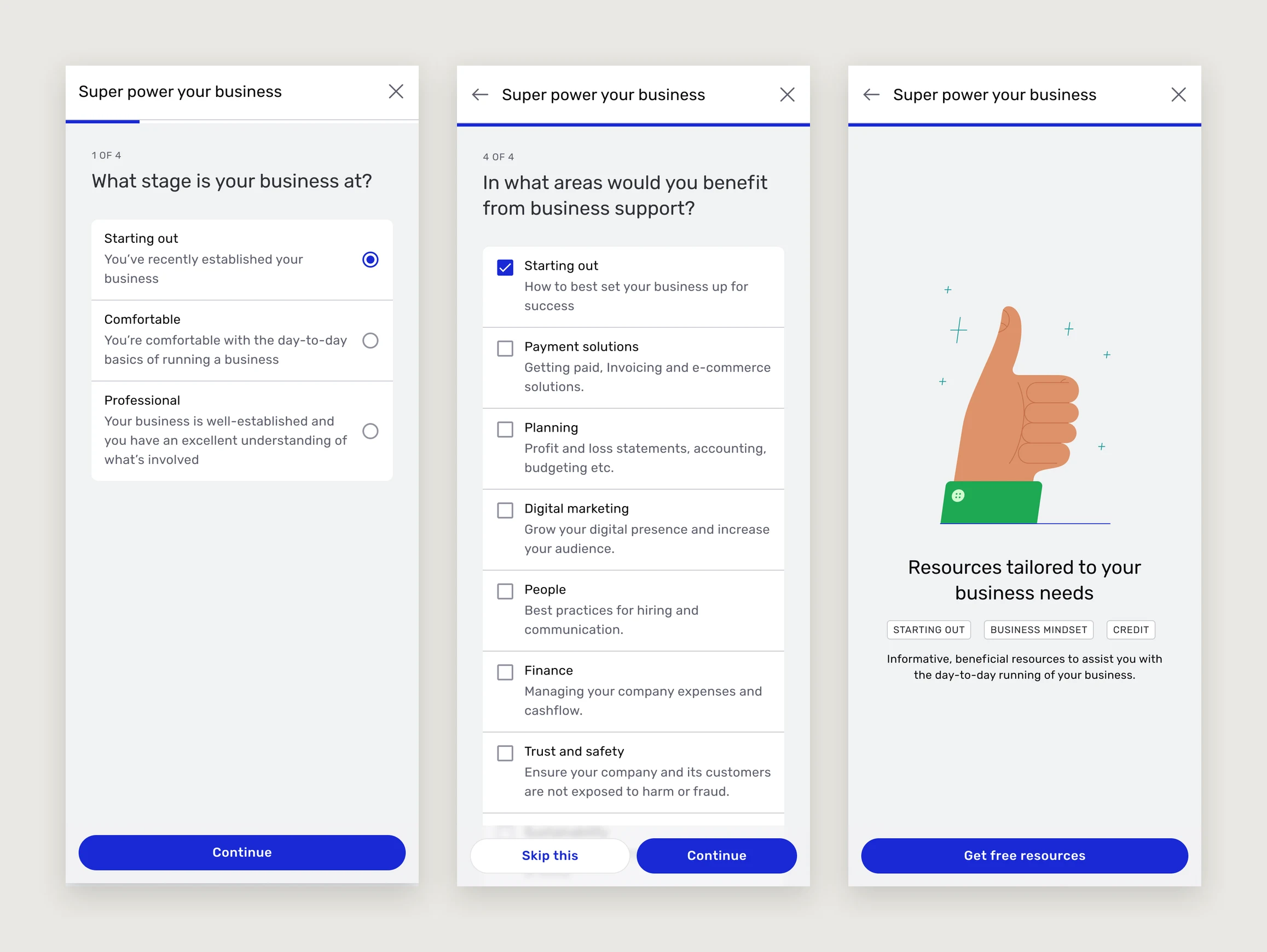
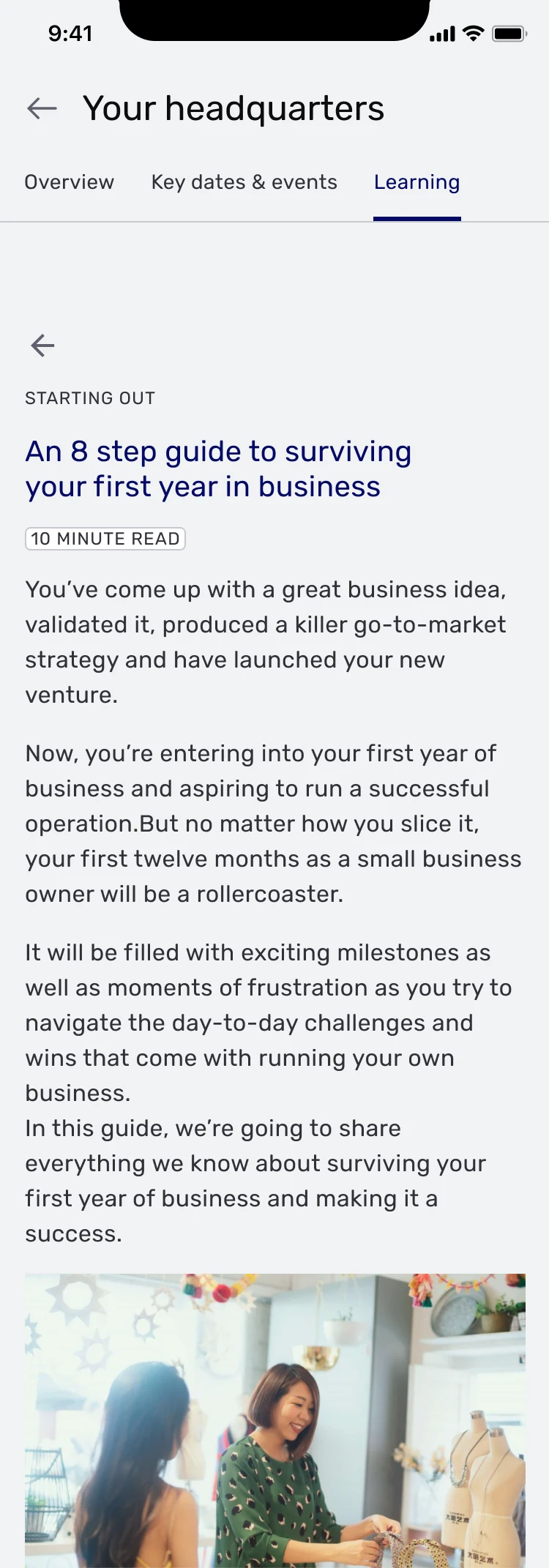
Four short questions about the stage of the business and where it needs support shape the articles a founder sees. The overview then shows resources chosen for them.
05The same hub on a phone
Testing
What people asked for
- -
More explanation of VAT before starting, and help estimating income.
- -
Clearer wording on Credit Builder. Some did not know a company has its own credit score.
- -
Key dates that can be added to a calendar, and a legend for the colours.
- -
Video as well as articles in learning.
Synthesis
What it taught me
- 01
Founders did the same jobs in very different ways. What they shared was wanting to feel in control.
- 02
A first version can be useful by helping people discover and start services, before it lets them manage everything.
- 03
Deadlines and plain-language learning earn a place next to products, because knowing what to do next was the most common pain.
